

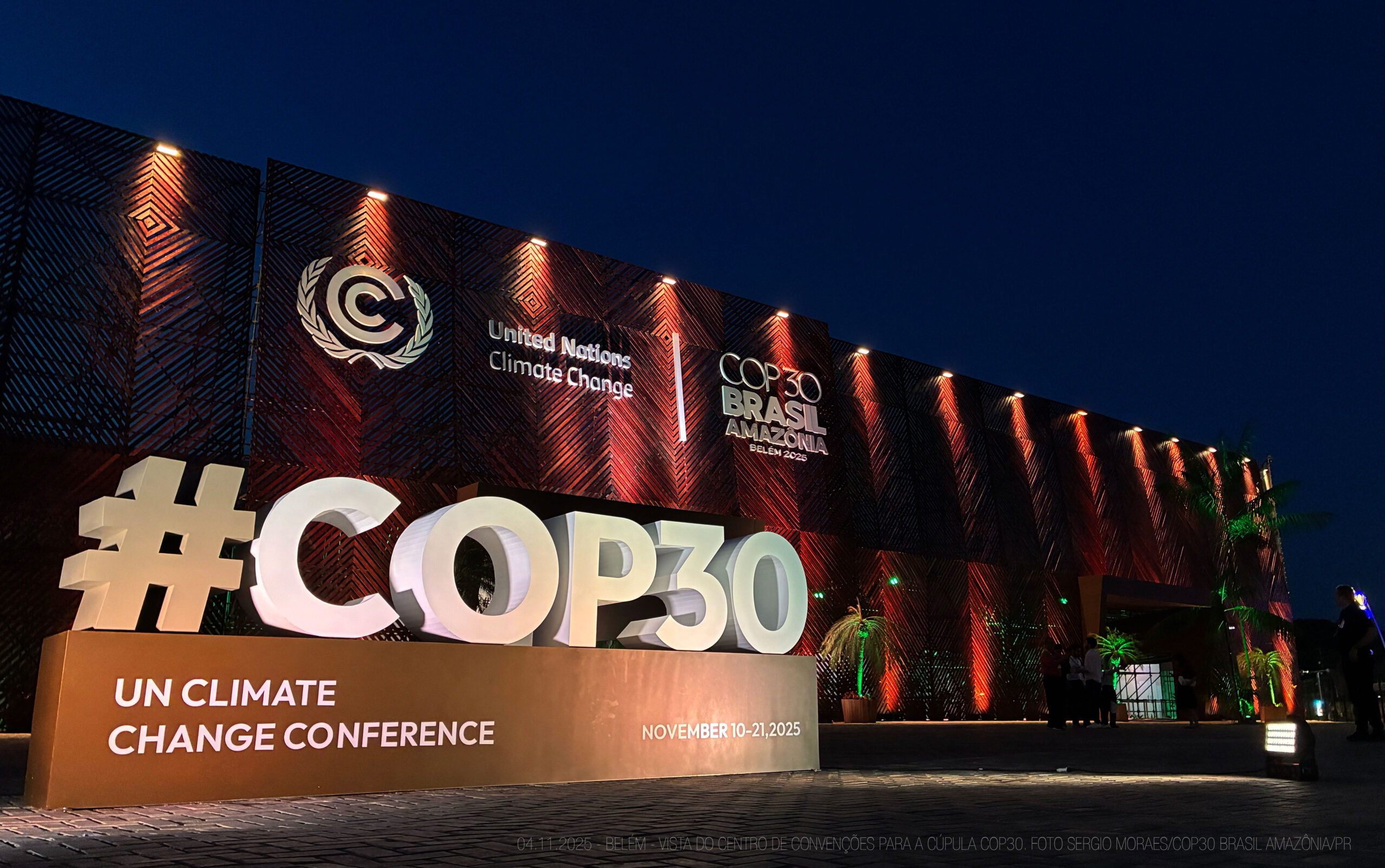
Conference of the Parties 30, held in Belém, Brazil, played a key role in advancing wind energy in Nigeria. The Nigerian Wind Energy Council’s partners, Oando Clean Energy Limited, endorsed by the National Council on Climate Change, unveiled the Wind Energy Blueprint. This blueprint sets the framework for developing the country’s most viable corridors for wind energy projects, including directions for both manufacturing and human resource development for the implementation of utility-scale projects, as well as hybrid mini-grids. A link to the Blueprint is below.
Wind Energy in Nigeria Pre COP30
In In February 2025, before the blueprint’s unveiling, Nigeria demonstrated commitment to wind energy through the development of the National Wind Energy Roadmap Strategy, which is still underway. However, advancement of wind energy in the country was minimal for much of this century. The unveiling of this Wind Energy Blueprint at COP30 is important because it signals the market on Nigeria’s willingness to advance wind energy. Unlike previous COPs, which yielded generalised political commitments, COP30 produced more concrete results for Nigeria, including practical momentum on climate finance mobilisation and new technical and institutional collaborations. For example, the United Kingdom launched an expanded climate partnership with Nigeria at COP30, providing strengthened technical and institutional support to accelerate Nigeria’s clean energy transition and governance reforms, underscoring international backing for energy-related climate action. These outcomes result in policy clarity, improved financing pathways, expanded technical partnerships, and system-level plans, all of which are significant for harnessing Nigeria’s wind energy potential in a timely way.
COP30 further reinforced the investment signals that Nigeria must unlock to develop large-scale wind energy. For example, discussions at the conference highlighted the availability of climate finance and the importance of reducing investment risks associated with intermittent renewable energy assets such as wind power. Specifically, multilateral development banks reaffirmed their commitment to climate finance, pledging innovative funding mechanisms for adaptation and energy transition projects, signalling strong long-term support for clean energy infrastructure in Nigeria. In addition, the launch of the Super Pollutant Country Action Accelerator provided structured funding to countries including Nigeria to adopt cleaner technologies, backed by measurable climate milestones, which further reinforced investor confidence in results-oriented climate finance mechanisms. The conference also generated strong global momentum around grid modernisation, transmission expansion, and increased system flexibility, all of which are critical to integrating wind energy at scale. These discussions signalled that Nigeria is actively implementing reforms to enable efficient renewable energy deployment. As a result, Nigeria’s wind energy landscape now appears to be approaching a pivotal moment, with investment costs increasingly aligned with the country’s substantial potential for wind development.
A series of high-level finance negotiations took place in Belém. Finance commitments underscored the need to mobilise significant capital to support climate transition in developing countries. Parties reaffirmed the shared goal of mobilising up to $1.3 trillion per year in climate finance by 2035, covering both mitigation and adaptation—a scaling-up of existing commitments and one of the summit’s central financial narratives.
A significant focus of these finance discussions was on reducing investment risk for renewable energy projects, including intermittent sources such as wind power. During energy-focused side events, multilateral development banks and climate funds emphasised de-risking instruments, such as guarantees, blended finance, and concessional capital, to encourage private sector participation in clean energy markets across Africa. For example, the African Development Bank’s Sustainable Energy Fund for Africa (SEFA) hosted sessions on mobilising commercial capital for renewable energy access, signalling an intensified push toward attracting financing at scale.
COP30 also injected tangible momentum into discussions on grid modernisation and transmission system investment. While there was no single global finance deal dedicated solely to power system upgrades, several initiatives and announcements demonstrated real commitments to infrastructure transformation. Notably, the European Investment Bank (EIB) and Neoenergia announced a €300 million agreement to modernise Brazil’s electricity grid, a high-profile example of the type of financing mechanisms being championed at COP30. Neoenergia panel sessions and workshops on energy infrastructure convened organisations such as National Grid and international partners to spotlight the regulatory, technological, and investment conditions necessary to support scalable, resilient power systems.
In parallel with discussions on financing and the grid, COP30 outcomes included commitments to scale up climate adaptation funding, with parties agreeing to at least triple adaptation finance by 2035. This reflects an enhanced understanding that energy system resilience, such as integrating variable renewables like wind, must be paired with robust financial flows to withstand the impacts of climate change.
Taken together, these developments helped reinforce a narrative that developing economies, such as Nigeria, are working to align their policies, finance, and infrastructure readiness for the deployment of renewable energy. The collective signals from COP30, ranging from global finance targets and commitments from Multilateral Development Banks to specific grid investment agreements, suggest that the structural transformation required to integrate wind energy is gaining traction. For Nigeria, this creates a policy and investment context in which the costs of capital are increasingly understood and addressed, and where international finance and infrastructure conversations support the technical potential for wind energy development.
The significance of these trends is even more pronounced when viewed through a comparative lens. Nations with comparable economic and institutional characteristics have demonstrated that global engagement strategies can transform their renewable energy industries. Kenya is a clear example.
The phenomenal progress achieved by the Lake Turkana Wind Power Project, one of Africa’s largest, is a direct result of blending COP-compatible financing models with global collaboration. This is precisely what COP30 offers to Nigeria: the same factors, as demonstrated, showing how concessional public finance can be leveraged with private capital to mitigate finance and risk, a finance and risk-mitigation approach championed by multilateral development banks (MDBs) and climate funds during the Energy and Finance thematic sessions. At the conference, institutions such as the African Development Bank (AfDB), the Green Climate Fund (GCF), and the European Investment Bank (EIB) demonstrated how concessional public finance can be combined with private capital to reduce investment risk for large-scale renewable energy projects, including wind power. These factors, amongst others, contribute to the rapid development of wind industries in developing nations.
Despite demonstrating how concessional public finance can be leveraged with private capital to mitigate and encourage progress, it is ultimately up to Nigeria to ensure that the COP30 is effective in the country. If the COP30 is to provide more than just momentum for change, the National Wind Energy Blueprint must progress through the development of bankable project pipelines, “hard” procurement plans, and public policy coordination in Nigeria about grid standards, country regulations for the siting of development projects, land use plans, and environmental studies that accommodate the development of wind. Alliances formed at COP30, with entities such as the Africa Minigrid Development Association (AMDA), Global Wind Energy Council (GWEC), International Renewable Energy Agency (IRENA), or foreign wind turbine manufacturers, for example, must formalise their technical objectives through pilot projects. Education, local production, and social inclusion plans must also be developed to ensure that Nigeria does not only develop onshore or offshore wind “farms” but also a viable “wind industry”.
Conclusion
COP30 is evidently more than a global climate meeting for Nigeria. It is a critical point in diplomacy that forms new policy frameworks, enhances investment confidence, forges new technical partnerships, and implements structural transformations that could make wind energy a significant contribution to Nigeria’s sustainable energy future. Today, with the collective strength Nigeria has achieved at COP30, the country is given an exceptional opportunity to drive the rapid expansion of wind energy, enhance energy security, and position itself firmly at the forefront of renewable energy innovation in Africa. The challenge is to ensure that the COP30 Belém momentum is translated into tangible projects that can expand wind energy.
REFERENCES
Global Wind Energy Council (2024). Global wind report 2024. GWEC.
International Renewable Energy Agency (2023). Renewable Energy Roadmap and Grid Integration Strategies for Nigeria. IRENA.
Reuters. (2025). COP30: Big pledges on renewables and industry, but ambition falters on fossil fuels. Reuters Sustainability News.
United Nations Framework Convention on Climate Change (2025). COP30 official conference outlook and global climate finance objectives. UNFCCC.
African Development Bank Group. (2025, November 11). COP 30: Multilateral development banks reaffirm their commitment to climate finance, pledge innovative funding for adaptation. African Development Bank. United Nations Framework Convention on Climate Change. (2025). COP30 Action Agenda outcomes report: Super Pollutant Country Action Accelerator and related initiatives. UNFCCC. https://unfccc.int/sites/default/files/resource/COP30%20Action%20Agenda_Outcomes%20Report_December_2025.pdf
