

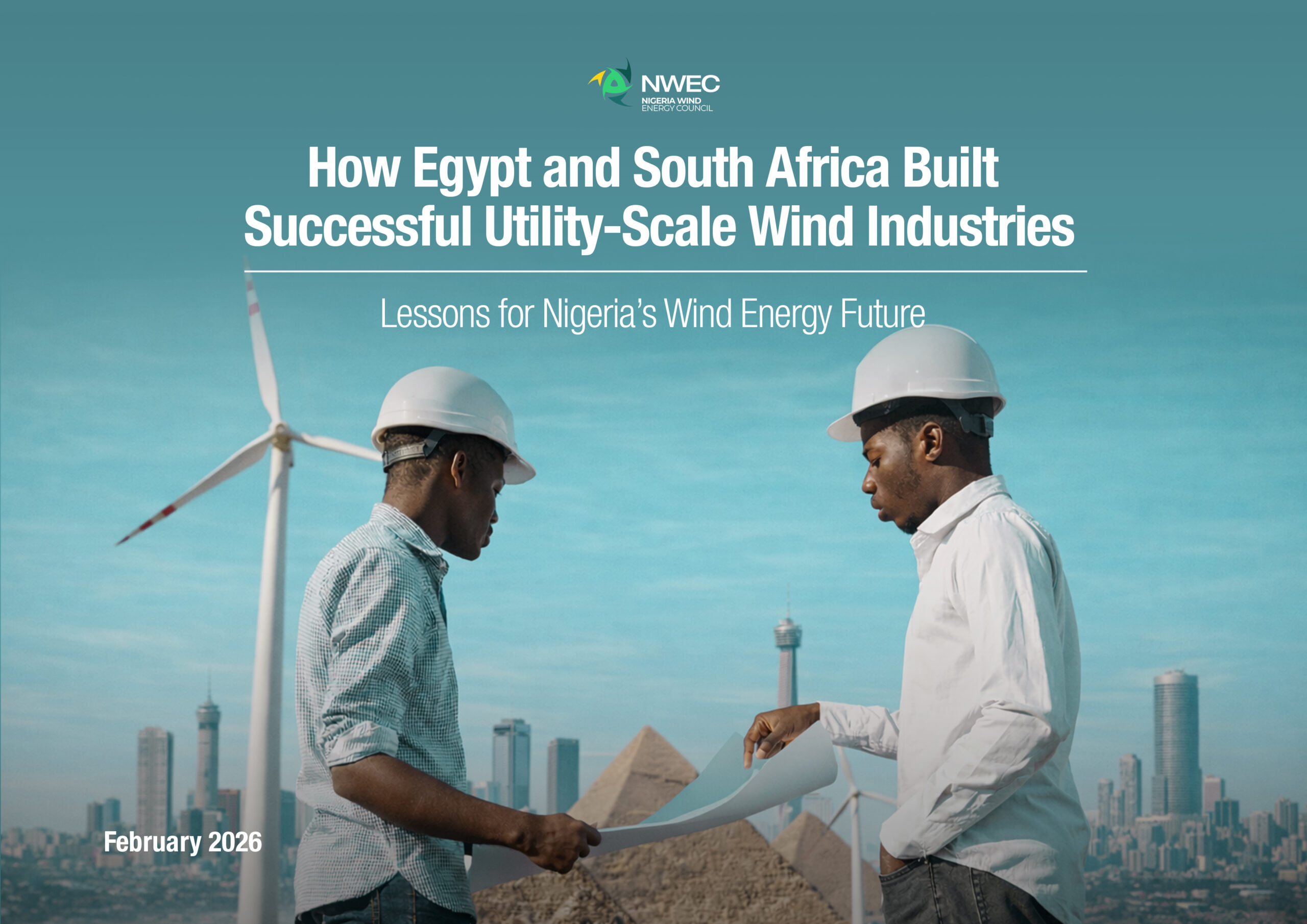
Lessons for Nigeria’s Wind Energy Future
Executive Summary
Across Africa, Egypt and South Africa stand out as the continent’s most successful countries in deploying utility-scale wind power. Together, they account for over 60% of Africa’s installed wind capacity, host some of the continent’s most significant projects, and continue to attract millions of dollars in international investment.
From Egypt’s rapid build-out of gigawatt-scale wind corridors in the Gulf of Suez to South Africa’s globally respected Renewable Energy Independent Power Producer Procurement Programme (REIPPPP), these two countries demonstrate that large-scale wind deployment is not accidental; it is the product of clear policy direction, strong institutions, bankable project structures, and long-term political commitment.
This case study examines:
- How Egypt and South Africa started their wind journeys
- The policy, regulatory, and investment decisions that enabled their success
- The key enablers and turning points in their wind sectors
- And most importantly, what Nigeria can learn and apply as it positions itself to become a leading wind energy player in Africa.
AUTHOR: Ojodomo Odiniya | Linkedin
Research & Operations Analyst
Nigerian Wind Energy Council (NWEC)
