

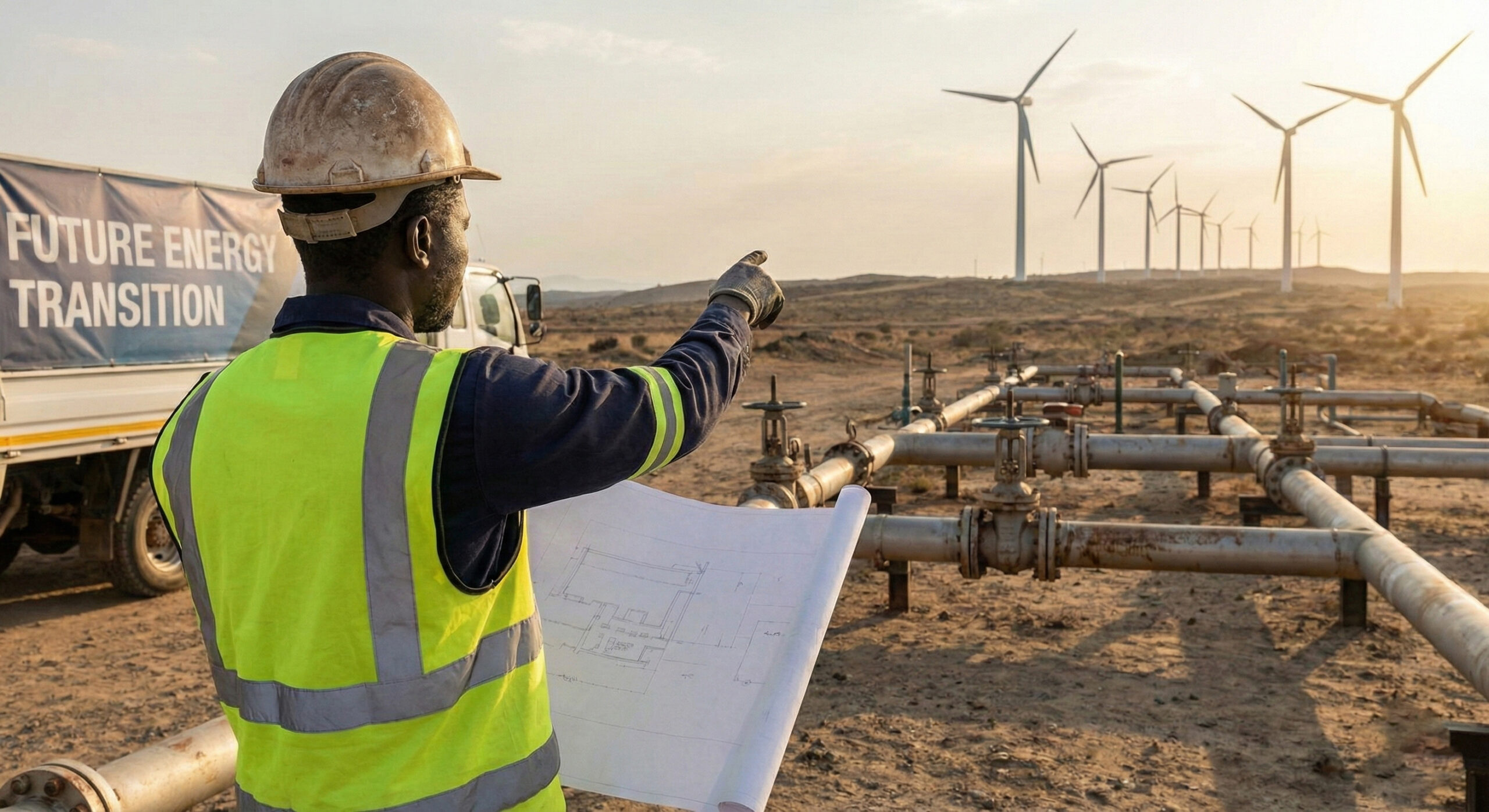
Nigeria’s energy future is being shaped by a mix of strategic choices, with natural gas currently playing a prominent role. With the rollout of the Gas Master Plan 2026 by the Nigerian National Petroleum Company Limited (NNPC Ltd), the country has reaffirmed its commitment to leveraging its vast gas reserves as the foundation for electricity generation, industrial growth, and economic transformation. At a time when global energy systems are rapidly shifting toward renewables, Nigeria’s strategic emphasis on gas raises essential questions. What does this mean for the power sector? And how does this positioning affect the adoption of wind energy within Nigeria’s broader transition agenda?
To answer these questions, it is essential to situate the Gas Master Plan within Nigeria’s historical challenges with electricity. For decades, Nigeria’s power sector has struggled with inadequate generation, grid instability, and persistent supply shortfalls. Although installed capacity has increased over time, actual generation has frequently fallen below potential due to gas supply disruptions, infrastructure constraints, and liquidity challenges in the electricity value chain (Nigerian Electricity Regulatory Commission, 2023). Since the majority of Nigeria’s grid-connected generation is gas-fired, irregular gas supply has had cascading effects on power reliability.
The Gas Master Plan seeks to address these structural bottlenecks. It prioritises domestic gas utilisation, pipeline expansion, improved pricing frameworks, and enhanced coordination between upstream producers and power generation companies. In principle, a more reliable domestic gas supply could significantly improve generation stability. Power plants that have historically operated below capacity due to fuel shortages may finally function closer to their technical limits. This could translate into fewer blackouts, reduced reliance on diesel- and petrol-powered generators, and improved industrial productivity.
Beyond electricity, the Plan positions gas as an industrial enabler. By linking gas development to fertiliser production, petrochemicals, and manufacturing clusters, the strategy reflects broader economic ambition. Reliable power and industrial gas supply are seen as twin engines of growth. This approach aligns with Nigeria’s broader development agenda and echoes the framing of gas as a “transition fuel” in many emerging economies (International Energy Agency, 2022).
However, the concept of gas as a transition fuel introduces complexity. Transition implies temporality – a movement from one state to another. In energy policy terms, gas is often presented as a bridge between high-carbon fuels and low-carbon renewables. Yet bridges can become destinations if policy sequencing is unclear. Large-scale gas infrastructure investments – pipelines, processing plants, and gas-fired power stations – are capital-intensive and designed for multi-decade operation. Once established, economic pressures naturally incentivise prolonged utilisation to recover investment costs.
This stage is where the implications for wind energy become particularly important. Wind energy in Nigeria has historically been underdeveloped despite promising wind corridors, particularly in northern regions such as Katsina and parts of the Middle Belt. Early pilot projects and wind mapping initiatives demonstrated technical potential, but scaling has remained limited due to grid constraints, financing challenges, and regulatory uncertainty (Energy Commission of Nigeria, 2015). The question, therefore, is whether an expanded gas framework will crowd out wind development or create enabling conditions for it.
Technically, gas and wind can complement each other. Wind generation is variable; output fluctuates with wind speed and weather patterns. Integrating wind into a national grid requires flexibility — the ability to ramp generation up or down quickly to maintain system stability. Modern gas-fired power plants, particularly open-cycle gas turbines, offer this flexibility. They can respond rapidly to changes in demand or renewable output, thereby stabilising the grid.
In this configuration, gas does not compete with wind; it supports it. A well-coordinated energy system can use gas as a flexible balancing resource while expanding wind capacity, a model observed in several mature power markets (International Renewable Energy Agency, 2023). For instance, in Texas, the Electric Reliability Council of Texas (ERCOT) integrates large volumes of wind power by relying on gas-fired plants to ramp up quickly when wind output falls and scale down when wind generation is high, thereby maintaining grid stability. Similarly, in the United Kingdom, the National Grid relies on gas generation to balance fluctuations in offshore wind, particularly during peak demand and variable weather. Even in Germany’s renewable-heavy system, gas plants provide operational flexibility to stabilise supply when wind and solar output fluctuate. These examples demonstrate that flexible gas generation can serve as a stabilising backbone for wind expansion, an insight with implications for Nigeria’s energy transition pathway.
Yet complementarity is not automatic. It requires deliberate policy alignment. If the Gas Master Plan is implemented without parallel planning for renewable integration, wind projects may struggle to secure transmission access, long-term power purchase agreements, or investment guarantees. Financial resources, both domestic and international, are finite. A policy environment that heavily prioritises gas infrastructure could inadvertently divert capital away from renewable projects.
There is also the matter of grid readiness. Nigeria’s transmission infrastructure has long been identified as a bottleneck in the power value chain. Even if gas supply improves generation output, transmission constraints may limit how much electricity reaches consumers. For wind adoption to succeed, grid expansion must extend into high-wind areas, and grid codes must accommodate variable generation. Without these reforms, wind energy risks remaining marginal despite its technical potential.
Climate commitments add another dimension to the conversation. Nigeria has articulated its Energy Transition Plan, which outlines ambitions to achieve net-zero emissions by 2060 while expanding energy access (Federal Ministry of Environment, Nigeria, 2022). International climate finance institutions increasingly prioritise renewable energy investments, including wind. If Nigeria clearly positions gas as a short-term reliability mechanism while articulating a credible long-term roadmap for renewable expansion, it could attract blended finance and concessional funding for wind projects.
Conversely, if gas expansion appears to deepen long-term fossil dependency without a clear renewable trajectory, climate-aligned investors may hesitate. Perception shapes capital flows. The narrative around Nigeria’s energy sequencing will influence not only domestic policy but also international partnerships.
Ultimately, the issue is not gas versus wind. It is about strategic sequencing and policy coherence. Nigeria requires immediate improvements in electricity reliability. Gas, given existing infrastructure and resource endowment, can play a stabilising role. Improved coordination between gas and power could reduce generation shortfalls, strengthen industrial productivity, and enhance investor confidence in the electricity market.
However, the long-term sustainability of Nigeria’s energy system depends on diversification. Wind energy offers resilience, environmental benefits, and alignment with global decarbonisation trends. It also reduces exposure to fuel price volatility and strengthens energy security by diversifying energy resources.
The Gas Master Plan, therefore, presents both opportunities and risks. It offers a near-term pathway to stabilise Nigeria’s power sector. At the same time, it tests Nigeria’s commitment to building a renewable-ready grid. The decisive factor will not be the existence of gas infrastructure, but the policy architecture surrounding it.
If renewable targets are embedded in national planning, if grid expansion anticipates wind integration, and if regulatory frameworks facilitate hybrid gas-renewable systems, gas can serve as a bridge. If not, it may become a structural ceiling.
Nigeria stands at an inflexion point. Gas may anchor today’s electricity reliability. Wind may shape tomorrow’s sustainability. The challenge and the opportunity lie in ensuring that these pathways are not mutually exclusive, but mutually reinforcing.
References
Energy Commission of Nigeria. (2015). Renewable energy master plan (Revised edition). Abuja, Nigeria.
Federal Ministry of Environment, Nigeria. (2022). Nigeria’s energy transition plan. Abuja, Nigeria.
International Energy Agency. (2022). Africa Energy Outlook 2022. Paris, France.
International Renewable Energy Agency. (2023). Renewable power generation costs in 2022. Abu Dhabi, UAE.
Nigerian Electricity Regulatory Commission. (2023). Quarterly report on the Nigerian electricity supply industry. Abuja, Nigeria.
